Context menu is used to surface key actions tied to a surface or element, helping users pivot, or accelerate through discovery, and consumption experiences without UI clutter.
Project
Context Menu
Timeline
H1 '26
Team
Facebook Design System
Context
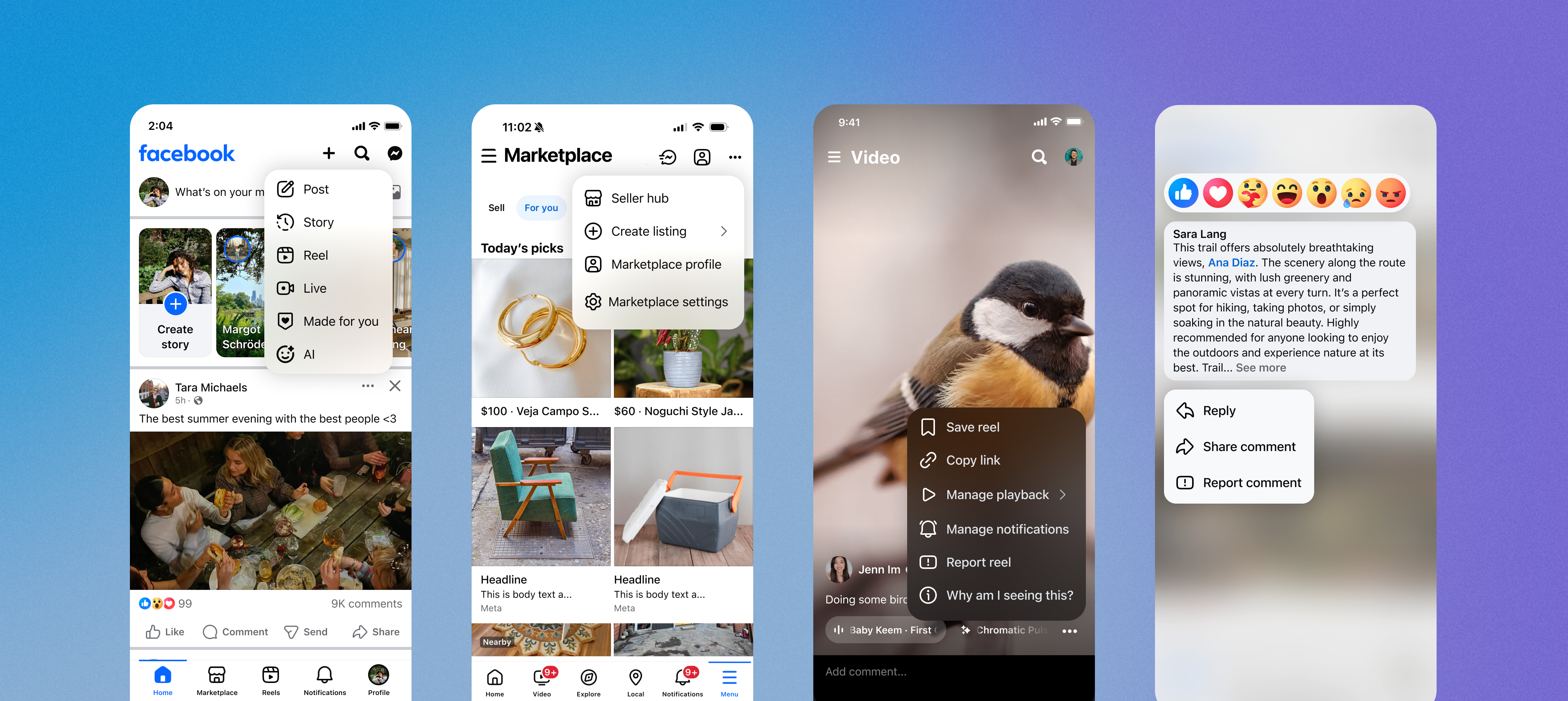
We developed Context Menu as part of a broader system simplification and unification mandate from design leadership to declutter Facebooks' interface, elevate quick actions with a more light-weight, accessible alternative to bottom-sheets.
The system quality mandate coincided with qualitative research indicating current app action patterns (bottom-sheets, and full screen menus) drive decision paralysis, the over-indexing on options without thoughtful consolidation generate more noise than signal.
There was also a system gap and product need to address. Teams were building custom solutions that were feature-optimized, and inaccessible, all this culminated in a multi-half investment on a system solution.
Strategy
The MVP component system was built around common and emerging priority product use cases that all ladder up to our unification goals. These were:
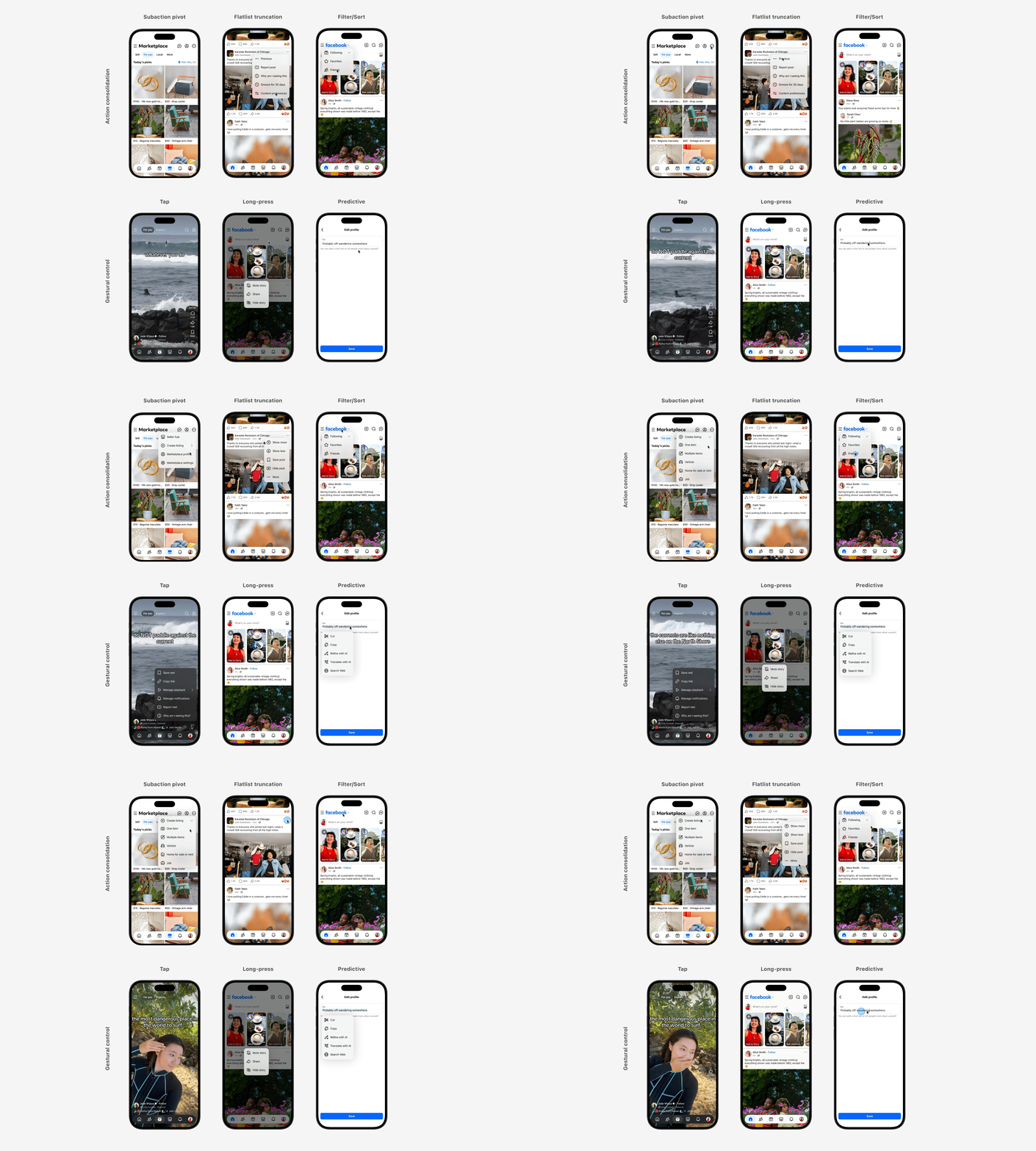
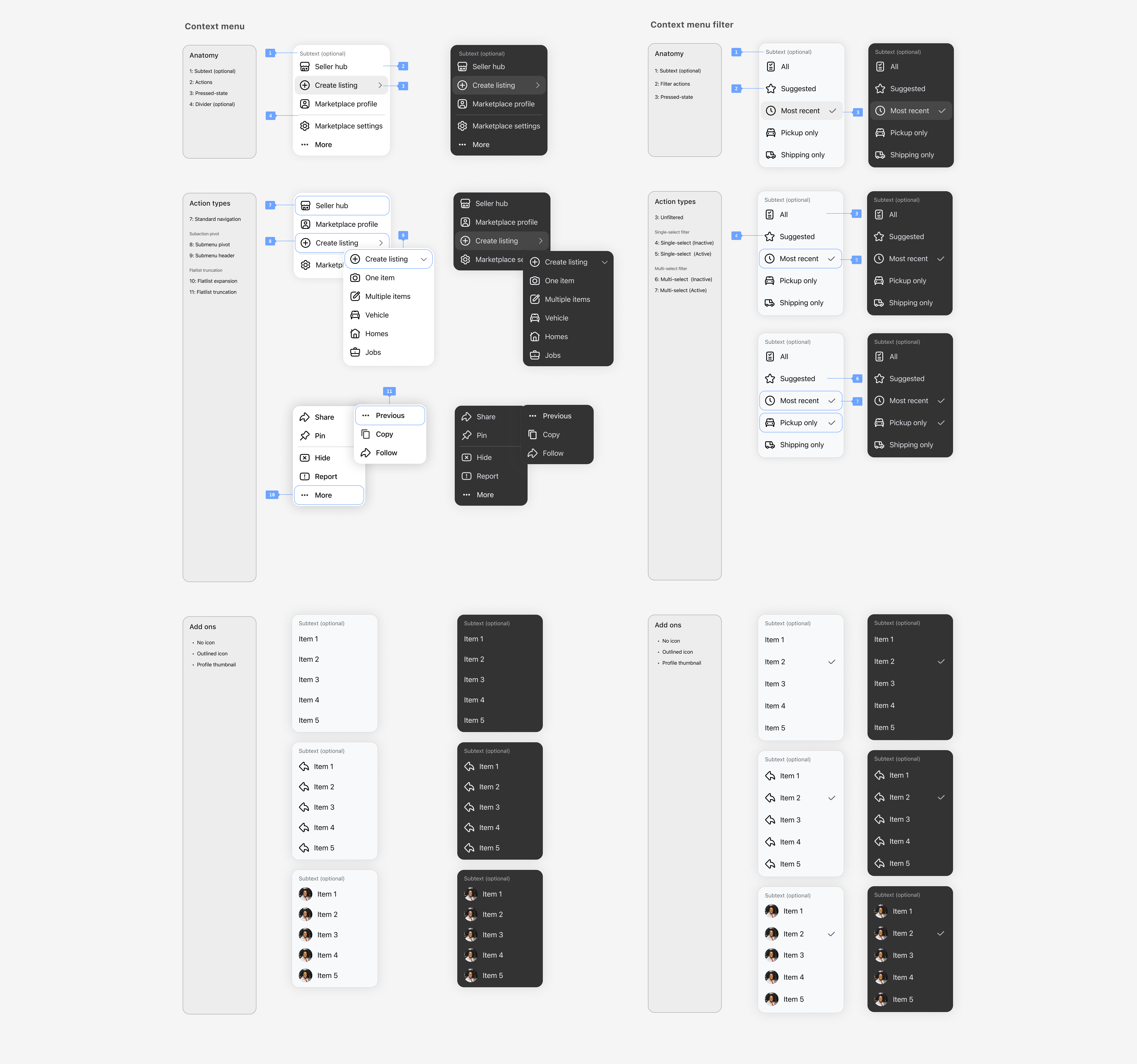
1) Action consolidation: Building new foundational logic to support and scale nested actions (subaction pivots), long flatlist.
2) Filter/Sort: Extending component function to help scale usage as an alternative to clutter-prone patterns like bottomsheets.
3) Gestural controls: Expanding context menu application to gesturs beyond tap (explicit entry), including long-press (implicit entry), predictive (user signals).
Outcome
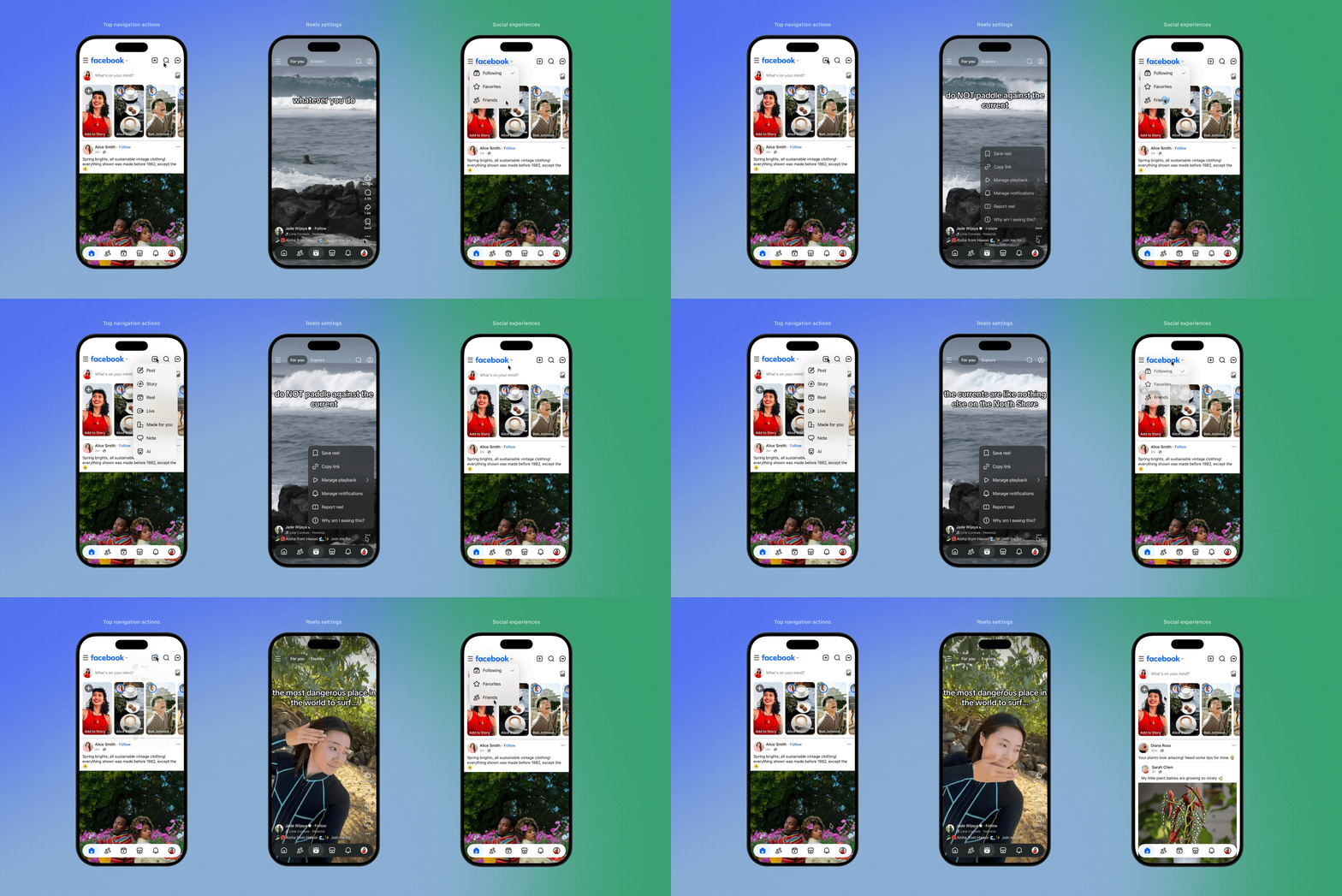
Since introducing the component into the system, context menu has been widely used to for experimentation and stress-tested for scalability across regression-sensitivity surfaces. It’s usage for rapid iteration alone has drastically reduced engineering and design cost in triaging accessibility and quality bugs as a result of custom code.
On the metrics side, context menu was tested and launched on Facebook feed after demonstrating stat-sig metric impact correlated to it’s adoption. As part of their simplification strategy, Facebook Trust & Safety, Reels, and Social Experiences teams have also confirmed plans to adopt context menu for select workstreams in H2 ‘26.
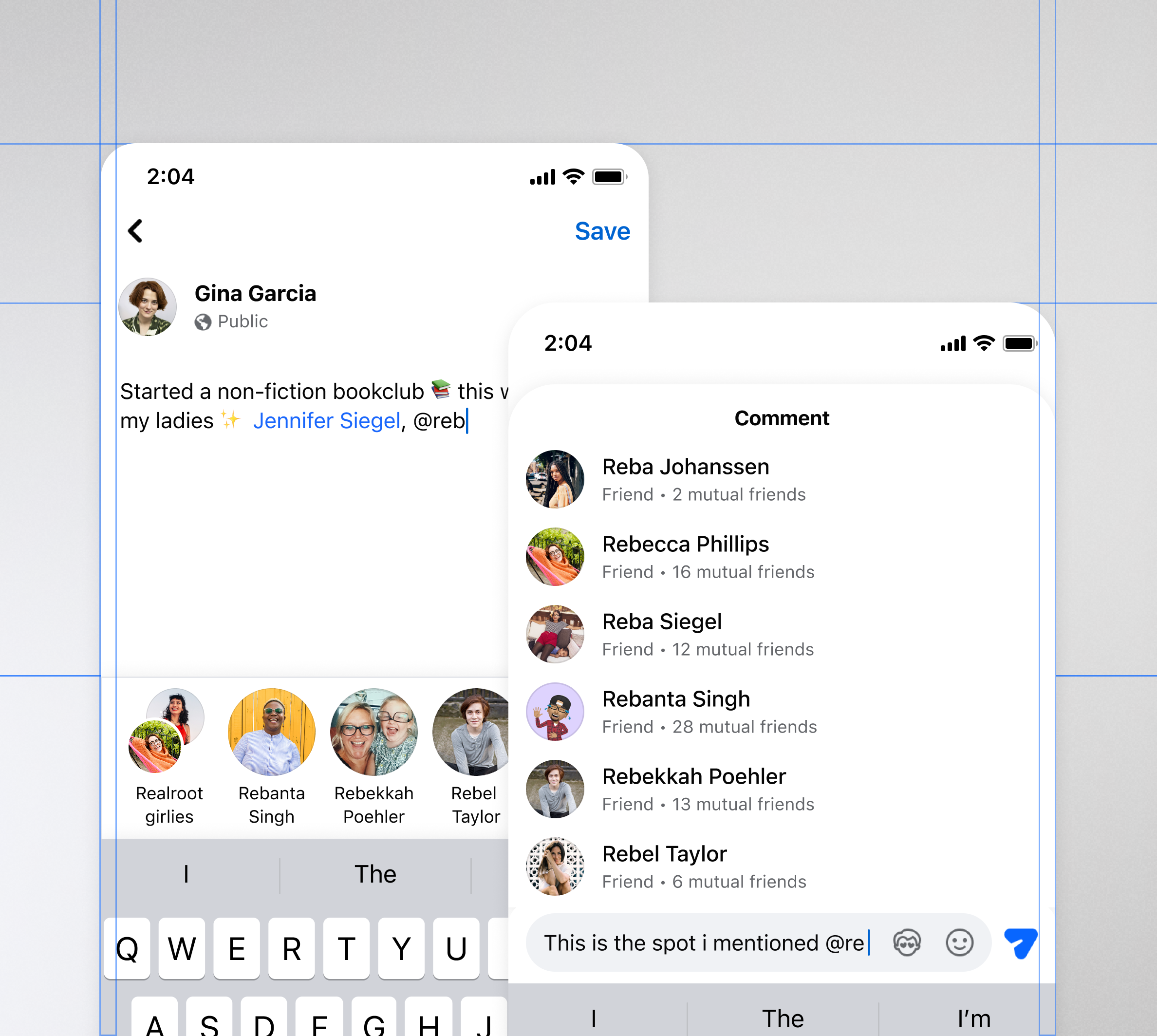
Context menu is used to surface key actions tied to a surface or element, helping users pivot, or accelerate through discovery, and consumption experiences without UI clutter.
Project
Context Menu
Timeline
H1 '26
Team
Facebook Design System
Context
We developed Context Menu as part of a broader system simplification and unification mandate from design leadership to declutter Facebooks' interface, elevate quick actions with a more light-weight, accessible alternative to bottom-sheets.
The system quality mandate coincided with qualitative research indicating current app action patterns (bottom-sheets, and full screen menus) drive decision paralysis, the over-indexing on options without thoughtful consolidation generate more noise than signal.
There was also a system gap and product need to address. Teams were building custom solutions that were feature-optimized, and inaccessible, all this culminated in a multi-half investment on a system solution.
Strategy
The MVP component system was built around common and emerging priority product use cases that all ladder up to our unification goals. These were:
1) Action consolidation: Building new foundational logic to support and scale nested actions (subaction pivots), long flatlist.
2) Filter/Sort: Extending component function to help scale usage as an alternative to clutter-prone patterns like bottomsheets.
3) Gestural controls: Expanding context menu application to gesturs beyond tap (explicit entry), including long-press (implicit entry), predictive (user signals).
Outcome
Since introducing the component into the system, context menu has been widely used to for experimentation and stress-tested for scalability across regression-sensitivity surfaces. It’s usage for rapid iteration alone has drastically reduced engineering and design cost in triaging accessibility and quality bugs as a result of custom code.
On the metrics side, context menu was tested and launched on Facebook feed after demonstrating stat-sig metric impact correlated to it’s adoption. As part of their simplification strategy, Facebook Trust & Safety, Reels, and Social Experiences teams have also confirmed plans to adopt context menu for select workstreams in H2 ‘26.