Context Menu
Problem
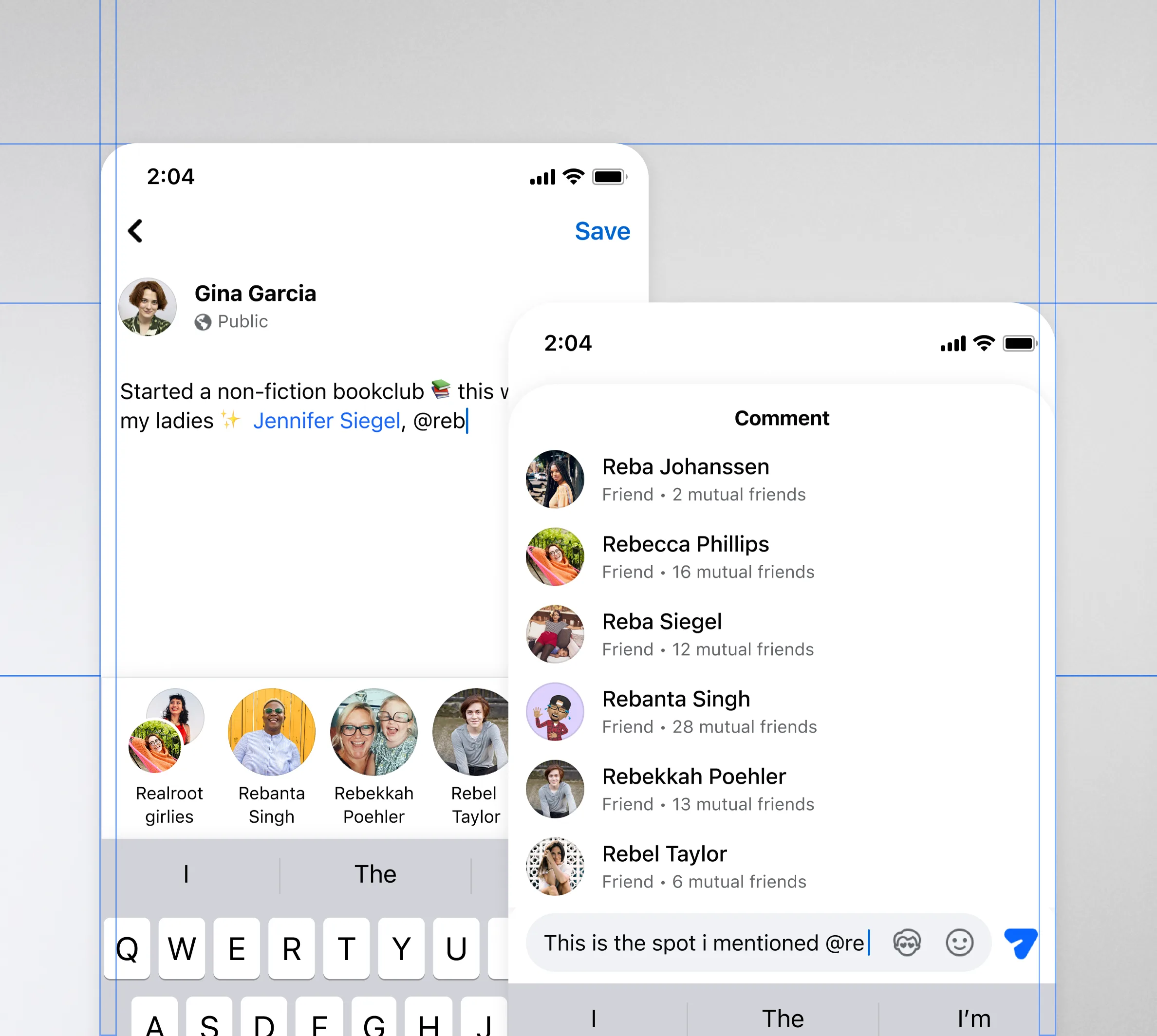
Facebook's quick-action patterns—bottom sheets and full-screen menus—had grown heavy and cluttered. Qualitative research showed these patterns were driving decision paralysis: over-indexing on options without thoughtful consolidation generated more noise than signal. The problem compounded at the system level. With no lightweight, accessible alternative in the design system, teams were building their own custom solutions—feature-optimized but inaccessible—each adding to the interface clutter and quality debt rather than resolving it.
Opportunity
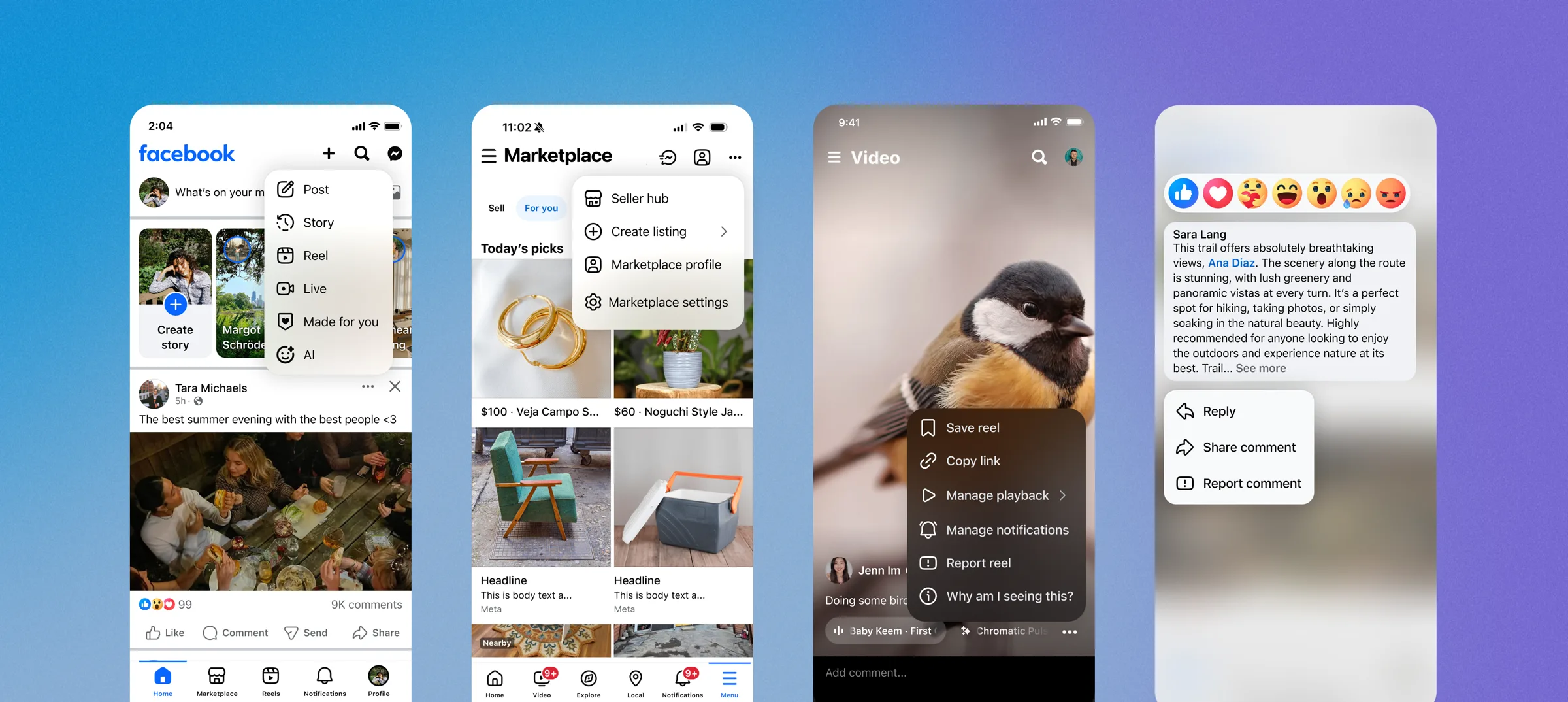
Context Menu emerged from a broader system simplification and unification mandate from design leadership: declutter Facebook's interface and elevate quick actions with a lightweight, accessible alternative to bottom sheets. The opportunity sat at the intersection of a clear quality mandate, research-validated user pain, and an unmet system need—strong enough signal to justify a multi-half investment in a system solution. The bet was that a single, accessible component could replace the sprawl of custom quick-action patterns while raising the usability bar across the app.
Iterations and explorations
We built the MVP component system around common and emerging priority use cases, each laddering up to the unification goal:
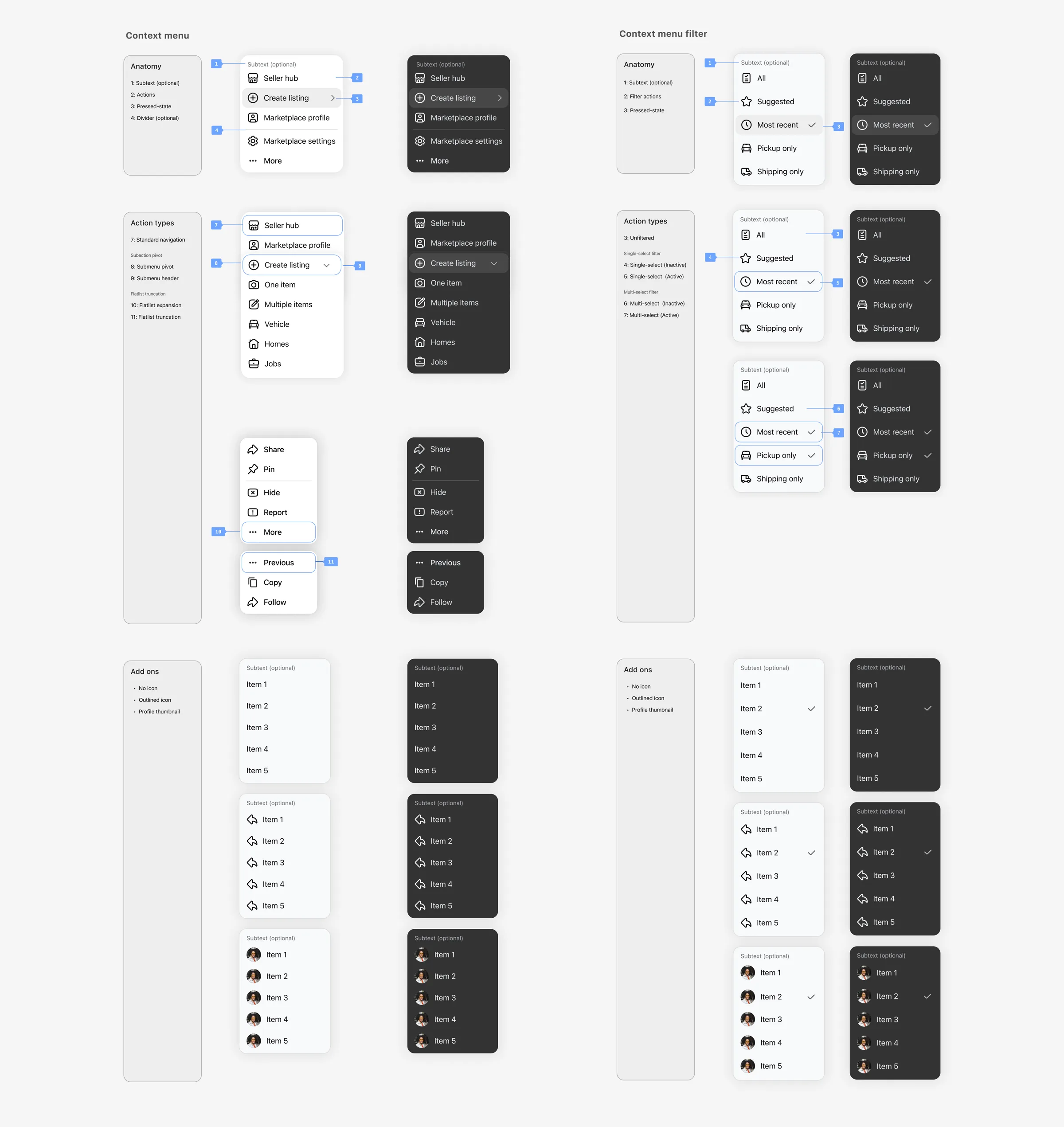
Action consolidation: New foundational logic to support and scale nested actions—subaction pivots and long flatlists—so complex option sets could be organized rather than arbitrarily grouped without a content framework.
Filter / Sort: Extending the component's function to serve as a scalable alternative to clutter-prone patterns like bottom sheets in filtering and sorting contexts.
Gestural controls: Expanding application beyond tap (explicit entry) to include long-press (implicit entry) and predictive triggers driven by user signals—broadening where and how the pattern could be invoked.
Across all three, the through-line was building foundational logic that scaled, so the component could absorb use cases that had previously each demanded their own custom implementation.
Outcome
Since its introduction, Context Menu has been widely used for experimentation and stress-tested for scalability across regression-sensitive surfaces. Its use for rapid iteration alone has drastically reduced the engineering and design cost of triaging accessibility and quality bugs that stemmed from custom code.
Most importantly, FDSContextMenu elevated app-action quality and accessibility across the board—and our experiment on TREP yielded positive creation metrics that enabled launch approval. Context Menu was subsequently tested and launched on Facebook Feed after demonstrating stat-sig metric impact correlated to its adoption—validating that a lightweight system component could replace heavier patterns without sacrificing performance.
Next steps
Adoption is already extending beyond its first surface: as part of their simplification strategy, Facebook Trust & Safety, Reels, and Social Experiences teams have confirmed plans to adopt Context Menu for select workstreams in H2 '26. As a foundational, gesture-flexible component, it's positioned to keep scaling across surfaces—retiring custom quick-action implementations and consolidating the ecosystem behind a single accessible standard, in service of the broader interface-simplification mandate it was built to advance.